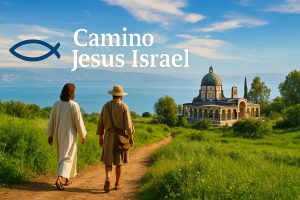
קאמינו ישו – Camino Jesus Israel
מסע רגלי ממקום ילדותו של ישו בעיר נצרת עד מקום צליבתו בכנסיית הקבר ירושלים, עם כל סיפורי הנצרות, הניסים, התלמידים, הרוחניות והטרגדיה לאורך תחנות חייו.
זהו קאמינו פיזי-רוחני אמיתי אבל לא סגפני: הולכים כל יום, מתקדמים ברגל בין אתרים, נושמים את הגליל והמדבר, אבל יש גם אוטובוס מלווה, מיטות נוחות ולפעמים אפילו חומוס טוב בדרך 😉
סימן הדרך – דג כחול על השביל ועל תעודת הצליין
הלוגו הרשמי של המסלול הוא סימן הדגים של ישו (Ichthys) בצבע כחול:
- זהו הסימון שילווה אותנו לאורך המסלול, על שילוט וסימוני דרך במקטעים הרלוונטיים.
- אותו דג כחול יופיע גם על תעודת הצליין שתקבלו בירושלים, בסיום ההליכה בכנסיית הקבר.
הדג הכחול הוא החותמת:
הלכתם, הזעתם, התפללתם, חוויתם – וקיבלתם “פספורט צליין” רשמי של Camino Jesus Israel.
מה זה קאמינו ישו?
Camino Jesus Israel – קאמינו ישו בשלושה סופי שבוע
מסע רגלי והיסטורי בעקבות חייו ופועלו של ישו, מהגליל עד ירושלים
Camino Jesus Israel הוא מסלול צליינות והליכה המתחלק לשלושה סופי שבוע (חמישי–שישי–שבת), המאפשרים ללכת בהדרגה את הדרך שישו הלך בגליל, לאורך הכנרת, במדבר יהודה ובירושלים.
מי שמשתתף בכל שלושת סופי השבוע –
משלים מסלול רציף ומשמעותי מנצרת ועד כנסיית הקבר, ומקבל תעודת צליין רשמית של המסלול.
סימן הדרך – סמל הדג הכחול
הלוגו הרשמי של המסלול הוא סמל הדג (Ichthys) בצבע כחול – סמל קדום של המאמינים הראשונים בישו.
- סמל הדג הכחול ישולב בהמשך גם כסימון לאורך חלקי השביל.
- אותו סמל יודפס על תעודת הצליין שתוענק בסיום המסע בירושלים.
הדג הכחול מסמל את החיבור בין הדרך, האמונה והזיהוי של הצליין כמי שהלך את Camino Jesus Israel.
סופ״ש 1 – גליל הבשורה: נצרת והתבור
חמישי – נצרת וכפר כנא: הבשורה, הילדות והנס הראשון
נצרת – עיר הילדות והבשורה
נצרת היא המקום שבו, לפי המסורת, התרחשה בשורת המלאך גבריאל למרים (לוקס א׳), ושם גדל ישו כילד וכנער.
במהלך הסיור נבקר ב:
- בזיליקת הבשורה – כנסייה גדולה ומרכזית, הבנויה מעל שרידי בית קדום המזוהה במסורת כבית מרים. כאן נעמיק במשמעות רגע הבשורה והאמירה “הנני אמו של האדון”.
- כנסיית יוסף – מזוהה כמקום ביתו וסדנת עבודתו של יוסף, אביו המאמץ של ישו. זהו אתר שמדגיש את פשטות חיי המשפחה בגליל.
- כנסיית בית הכנסת – מזוהה עם המקום שבו, לפי לוקס ד׳, ישו קרא מגלילת ישעיהו, הציג עצמו כמקיים הנבואה, ונתקל בדחייה מצד בני עירו. מכאן מתחיל המתח שבין נביא לבין סביבתו.
- עין מרים / כנסיית גבריאל – מסמלת את הקשר בין מרים לערי הסביבה ולמקורות המים של נצרת הקדומה.
כפר כנא – נס החתונה
לאחר מכן ניסע לכפר כנא, המזוהה במסורת עם נס החתונה (יוחנן ב׳), שבו הפך ישו מים ליין.
נבקר ב:
- כנסייה קתולית ובסמוך לה כנסייה אורתודוקסית, שתיהן משמרות את זכרון הנס.
נדבר על משמעות הנס הראשון: - המעבר מחיי יום־יום אנושיים לעשיית אותות,
- תפקידה של מרים בפנייתה לישו,
- והמסר על שמחה, חתונה וברכה לזוג.
הר הקפיצה – דחיית הנביא בעירו
נסיים בתצפית מהר הקפיצה, המזוהה במסורת עם ניסיון תושבי נצרת להשליך את ישו מצוק (לוקס ד׳).
כאן נעסוק במשמעות דחיית הנביא על ידי בני עירו, ובבחירה של ישו לצאת לדרך חדשה בגליל.
לינה: נצרת.
שישי – מנצרת להר תבור: דרך הגליל אל ההשתנות
נלך בנוף הגלילי בין נצרת להר תבור.
הר תבור – ההשתנות
על פי המסורת, על הר תבור התרחש אירוע ההשתנות (מתיו י״ז, מרקוס ט׳, לוקס ט׳): ישו מתגלה בתפארת, יחד עם משה ואליהו, בפני שלושה מן התלמידים.
- העלייה להר תבור:
- ניתן לעלות רגלית בשביל ההר – דרך מסורתית של צליינים,
- או לעלות באמצעות מיניבוס/שאטל בתשלום קטן כמעט עד הפסגה, למי שמעדיף לחסוך טיפוס.
- בפסגה נבקר בכנסיית ההשתנות, הבנויה על שרידי כנסיות קדומות.
באתר זה נדבר על:
- משמעות ההתגלות – ישו כבנו האהוב של האל,
- הקשר בין ישו לבין תורת משה והנבואה של אליהו,
- והרגע שבו התלמידים חווים “פסגת התגלות” לפני שיחזרו איתו אל המציאות היומיומית ולבסוף לירושלים.
לינה: אזור כפר תבור / שיבלי / דבורייה.
שבת – שביל הבשורה בגליל הירוק
יום הליכה מתונה יותר בגלגול הגבעות והיער בין התבור לגליל הירוק.
נלך דרך:
- יער בית קשת – אזור חורש ושבילי הליכה הפונים מערבה וצפונה.
- שבילים חקלאיים וגבעות עד אזור קיבוץ לביא.
זהו יום המדגיש את הדרך עצמה:
נוכל לדון בקטעים רבים בברית החדשה המתארים את ישו הולך בין כפרי הגליל, מלמד בבתי כנסת, פוגש אנשים פשוטים, מספר משלים המבוססים על הזריעה, הקציר, הדגה והחיים החקלאיים.
לינה: קיבוץ לביא.
סיום סופ״ש ראשון: הבנה מעמיקה יותר של ילדות ישו, הבשורה, הנס הראשון וההתגלות על הר תבור.
סופ״ש 2 – ניסים על שפת הכנרת: מצוק ארבל ועד ירדנית
חמישי – מצוק ארבל ונחל ארבל, מגדל (Magdala)
הר ארבל – תצפית אל זירת הניסים
נצא אל הר ארבל, מצוק גבוה מעל הכנרת.
מהפסגה נשקיף על: כפר נחום, טבחה, הר האושר, מגדל וגדה מזרחית של הכנרת.
זוהי תצפית המאפשרת להבין בצורה חזותית את זירת הפעולה העיקרית של ישו בגליל:
- האזור שבו לימד את ההמונים,
- שבו התרחשו ניסים רבים,
- ושבו בחר להתגורר לאחר שעזב את נצרת.
נחל ארבל – ירידה אל העמק
נרד בשביל נחל ארבל (לפי רמת הקבוצה – המסלול התלול עם סולמות/יתדות או חלופה קלה יותר).
נחל ארבל מוכר מבחינה היסטורית כאתר מערות מפלט מתקופת הורדוס, ומאפשר לנו לדבר על הסביבה המדינית-ביטחונית של ימי בית שני.
מגדל (Magdala) – מרים המגדלית והעיירה היהודית על שפת הכנרת
נסיים באזור מגדל, מזוהה עם העיירה מגדלה שבשוליה פעלה מרים המגדלית:
- נבקר באתר Magdala, הכולל שרידי בית הכנסת מן התקופה השנייה, מקווה, מבני ציבור ומתחם תפילה מודרני.
- נדבר על דמותה של מרים המגדלית כאחת התלמידות המרכזיות של ישו, כעדה חשובה לאירועי הצליבה והתחייה, ועל תרומתה לתולדות הנצרות.
לינה: מגדל / גינוסר / טבריה.
שישי – חגורת הניסים: מגדל – טבחה – הר האושר – כפר נחום
זהו אחד הימים הרוחניים ביותר במסלול, המוקדש למעשי הניסים וההוראה.
טבחה – נס הלחם והדגים
נלך צפונה לאורך הכנרת ונגיע לטבחה, המזוהה עם נס ריבוי הלחם והדגים (מתיו י״ד, מרקוס ו׳ ועוד):
- בכנסיית הלחם והדגים נראה את רצפת הפסיפס המפורסמת של הסל והדגים.
- נדון במשמעות הנס – נדיבות, שפע, והאחריות להזין קהילה גדולה.
הר האושר – הדרשה על ההר
נעלה להר האושר, המזוהה עם מקום הדרשה על ההר (מתיו ה׳–ז׳):
- נבקר בכנסייה שבראשה, המוקפת בגנים שקטים ונוף לכנרת.
- נעיין בברכות (אשרי הענווים, רודפי השלום וכו’) ובמשמעותן כמסמך יסוד של האתיקה הנוצרית.
כפר נחום – “עירו של ישו”
נרד אל כפר נחום, שהיה לפי המסורת מרכז פעילותו של ישו בגליל:
- שרידי בית הכנסת שבו לימד,
- מבנה מתומן המזוהה עם ביתו של פטרוס,
- מיקום על ציר דרכים ראשי בין הגליל לסוריה.
בכפר נחום נדבר על:
- ריפוי חולים (כמו חמות פטרוס והמשותק),
- שיחות עם הדייגים והתלמידים,
- והבחירה של ישו להתמקם במקום זה כמוקד שירותו.
לינה: מגדל / גינוסר / טבריה.
שבת – מהכנרת לירדן: טבריה וירדנית
נלך לאורך החוף הדרומי של הכנרת:
- נמשיך בהליכה לאורך החוף, נעבור דרך אזור טבריה וסביבתה – העיר הרומית–יהודית שהפכה מאוחר יותר גם למרכז יהודי חשוב.
- נגיע לאתר ירדנית (Yardenit), אתר טבילה מודרני על נהר הירדן.
באתר ירדנית נדבר על:
- משמעות הטבילה עבור נוצרים כיום: תשובה, התחלה חדשה, הזדהות עם טבילת ישו.
- ההבדל בין אתר מודרני ומפותח זה לבין אתר הטבילה המסורתי בקאסר אל־יהוד במדבר יהודה, אליו נגיע בסופ״ש השלישי.
סיום סופ״ש שני וחזרה הביתה –
לאחר שחווינו את עיקר סיפורי הניסים וההוראה על שפת הכנרת.
סופ״ש 3 – מדבר יהודה וירושלים: מן המדבר עד הקבר הקדוש
חמישי – מנזרי מדבר יהודה ונהר הירדן
קאסר אל־יהוד – טבילת ישו
ניסע דרומה בבקעת הירדן אל קאסר אל־יהוד, המזוהה במסורת עם מקום טבילת ישו בידי יוחנן המטביל (מתיו ג׳, מרקוס א׳, לוקס ג׳):
- נרד אל גדת הירדן, נראה את הכנסיות שבצד הישראלי ובצד הירדני.
- נדבר על משמעות הטבילה כפתיחת השירות הציבורי של ישו, ועל הקול "זה בני אהובי אשר רצתה נפשי בו".
מנזר דיר חג’לה – נזירים במדבר יהודה
נמשיך למנזר דיר חג’לה, מנזר מדברי עתיק הסמוך לירדן ולים המלח:
- המנזר משמר מסורות על נזירות במדבר, על חיי פרישות ותפילה במקום שקט ומבודד.
- כאן נדבר על מקומו של המדבר בתנ"ך ובברית החדשה – מרחב ניסיונות, הכנה, וחשבון נפש.
תצפית על מנזר סנט ג’ורג’ בואדי קלט
נעלה לכיוון ירושלים ונעצור בנקודת תצפית על מנזר סנט ג’ורג’ בואדי קלט, תלוי על צוק בתוך קניון מדברי עמוק:
- המקום משקף מסורת של התבודדות, תפילה ושקט במדבר יהודה.
- נעסוק במוטיב “המדבר” בחיי ישו (לדוגמה, ארבעים הימים של הניסיון במדבר) ובחיי הנזירים.
לינה: אזור מעלה אדומים / ירושלים.
שישי – השומרוני הטוב, הר הזיתים, גת שמנים ויד אבשלום
מוזיאון השומרוני הטוב – הדרך מירושלים ליריחו
נפתח במוזיאון השומרוני הטוב על כביש 1, שבו נשמרים פסיפסים מבתי כנסת, כנסיות ואתרים שומרוניים:
- כאן נקרא ונדון במשל השומרוני הטוב (לוקס י׳):
האיש היורד מירושלים ליריחו, שנפצע בידי שודדים, הכהן והלוי שעוברים הלאה, והשומרוני שעוצר ומסייע. - נעסוק בשאלת "מי הוא רעך?", וביחס לאחר ולפצוע.
הר הזיתים – תצפית על ירושלים
נמשיך אל הר הזיתים, ממנו נשקפת ירושלים העתיקה והר הבית:
- נבקר באחת הכנסיות (כמו כנסיית פטר נוסטר או דומינוס פלביט, לפי לוח הזמנים).
- נדבר על כניסתו של ישו לירושלים (יום ראשון של הדקלים), ועל בכיו על העיר – "ירושלים, ירושלים…".
גת שמנים – הלילה האחרון
נרד רגלית אל גת שמנים – כנסיית כל העמים וגן הזיתים העתיקים:
- המקום מזוהה עם תפילת ישו בלילה שלפני הצליבה, עם תחושת המצוקה, הערות התלמידים והבגידה של יהודה (מתיו כ"ו, מרקוס י"ד, לוקס כ"ב).
- זהו אתר מרכזי להבנת המתח בין שליחות, פחד ואמונה.
גיא קדרון ויד אבשלום – רקע ירושלמי מתקופת בית שני
נמשיך רגלית לאורך גיא קדרון, נעבור ליד יד אבשלום – מצבת קבורה מימי בית שני:
- כאן נדבר על הנוף ההיסטורי של ירושלים בתקופת ישו, על בתי הקבורה, על היחס למוות ולתחיית המתים במסורות היהודיות והנוצריות.
לינה: ירושלים.
שבת – ירושלים: חדר הסעודה האחרונה, התרנגול הקורא, ויה דולורוזה וכנסיית הקבר
יום מלא להעמקת עלילות ישו בירושלים:
חדר הסעודה האחרונה – הר ציון
נבקר במתחם המזוהה עם חדר הסעודה האחרונה (הסעודה האחרונה עם התלמידים, מתיו כ"ו, מרקוס י"ד, לוקס כ"ב):
- נדבר על יסוד סעודת האדון, על השיתוף בלחם וביין כסמל לגוף ולדם, ועל משמעותו עבור הקהילה הנוצרית לדורותיה.
כנסיית התרנגול הקורא (St Peter in Gallicantu)
נרד אל כנסיית התרנגול הקורא, המזוהה עם מקום משפטו של ישו בפני הכהן הגדול, ועם שלוש ההכחשות של פטרוס עד קריאת התרנגול:
- כאן נדבר על חולשת האדם, החרטה והסליחה, ועל מקומו של פטרוס כמנהיג קהילה למרות הכחשתו.
תצפית נוספת על הר הזיתים (אם הזמן מאפשר)
נוכל לשוב לנקודת תצפית נוספת או להעיף מבט כולל על העיר כדי לקשור יחד את מה שנלמד.
כניסה לעיר העתיקה, ויה דולורוזה וכנסיית הקבר
נכנס לעיר העתיקה דרך אחד השערים ונלך בויה דולורוזה:
- נעבור בין תחנות הייסורים, כל תחנה תסומן בהסבר על האירוע (נשיאת הצלב, הנפילות, מפגש עם נשים, ועוד).
- נסיים בכנסיית הקבר הקדוש, המזוהה עם מקום הצליבה (גולגולתא), אבן המשיחה והקבר הריק – לב האירועים של הצליבה והתחייה.
בכנסיית הקבר נקיים טקס סיום:
- סיכום המסע,
- זמן אישי לתפילה או התבוננות,
- והענקת תעודת צליין Camino Jesus Israel עם סמל הדג הכחול, למי שהשתתף בכל שלושת סופי השבוע.
השתתפות והשלמת המסלול
- כל סופ״ש עומד בפני עצמו ומאפשר היכרות מעמיקה עם חלק אחר בחיי ישו – הגליל, הכנרת, מדבר יהודה וירושלים.
- מי שמשתתף בשלושת סופי השבוע – משלים מסלול רציף מנצרת ועד ירושלים, ומשתתף בטקס הסיום בכנסיית הקבר עם קבלת תעודת צליין רשמית.
לפרטים, מועדים והרשמה –
ניתן ליצור קשר או להשאיר פרטים, ונחזור אליכם עם כל המידע על Camino Jesus Israel – קאמינו ישו בשלושה סופי שבוע.
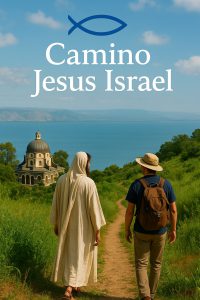
לוגיסטיקה וביטחון
- אוטובוס מלווה לאורך כל המסלול:
- מעביר את הציוד בין הלינות,
- מאפשר להצטרף/לרדת באמצע יום למי שמתעייף,
- מדלג על מקטעי כביש ומשמש גיבוי מלא.
- הליכה רק באזורים בטוחים ומוסדרים,
ללא הליכה ביריחו או בכפרים רגישים,
עצירות רק באתרים מוכרים, מוסדרים ומאושרים.
לינה בבתי הארחה/מלונות/צימרים נוחים בנצרת, בגליל, סביב הכנרת ובירושלים.
איך מצטרפים?
לפרטים נוספים, תאריכים והרשמה –
השאירו פרטים בטופס באתר / צרו קשר,
ונחזור אליכם עם כל המידע על Camino Jesus Israel – קאמינו ישו מנצרת לירושלים.
והדג הכחול?
הוא כבר מחכה לכם על השביל. 🐟
Camino Jesus Israel – Walking in the Footsteps of Jesus
A Pilgrimage from Nazareth to the Holy Sepulchre in Jerusalem
Camino Jesus Israel is a structured pilgrimage route that follows the life and ministry of Jesus in the Land of Israel – from his early years in Nazareth, through the Galilee and the Sea of Galilee, to the Jordan River, the Judean Desert and Jerusalem.
The route can be done in two formats:
- As three separate long weekends (Thursday–Friday–Saturday), or
- As a continuous 7–9 day journey, according to the wishes and ability of the group.
Those who complete the full route from Nazareth to Jerusalem receive an official Camino Jesus Israel Pilgrim Certificate.
Route Marking – The Blue Fish Symbol
The official logo of the route is the Ichthys fish symbol in blue – an ancient sign used by the first followers of Jesus.
- The blue fish will gradually be used as a waymark along sections of the route.
- The same symbol will appear on the Pilgrim Certificate awarded at the end of the journey in Jerusalem.
The blue fish identifies the route and marks its pilgrims as those who have walked the Camino Jesus Israel.
Weekend 1 – Galilee of the Annunciation: Nazareth and Mount Tabor
Thursday – Nazareth and Cana: Annunciation, Childhood and the First Miracle
Nazareth – City of the Annunciation and Childhood of Jesus
Nazareth is the town where, according to Christian tradition, the Angel Gabriel announced to Mary that she would bear Jesus (Luke 1), and where Jesus grew up.
We visit:
- Basilica of the Annunciation – built over a site identified with Mary’s home. Here we reflect on the Annunciation and Mary’s acceptance: “Let it be to me according to your word.”
- Church of St. Joseph – associated with Joseph’s workshop and the holy family’s everyday life.
- Synagogue Church – identified with the synagogue where Jesus read from Isaiah and declared the prophecy fulfilled (Luke 4), and where he first met rejection in his hometown.
- Mary’s Spring / Church of St. Gabriel – recalling the daily life of Nazareth and Mary’s connection to the town’s water source.
Cana – The Wedding at Cana
We then travel to Cana, traditionally identified with the site of the wedding where Jesus turned water into wine (John 2):
- We visit the Catholic and Orthodox churches commemorating the miracle.
We discuss the first public sign of Jesus – the transformation of water into wine, Mary’s role in prompting the sign, and the symbolism of joy, blessing and new beginnings.
Mount of Precipice – Rejection of the Prophet
We end with a viewpoint from Mount of Precipice, traditionally linked to the attempt of the people of Nazareth to cast Jesus from a cliff (Luke 4).
Here we consider the rejection of the prophet and Jesus’ decision to leave Nazareth and begin his public ministry in the wider Galilee.
Overnight: Nazareth.
Friday – From Nazareth to Mount Tabor: Towards the Transfiguration
We walk across the Galilean landscape from Nazareth towards Mount Tabor.
Mount Tabor – The Transfiguration
According to tradition, the Transfiguration took place on Mount Tabor (Matthew 17, Mark 9, Luke 9), where Jesus appeared in glory with Moses and Elijah before three disciples.
- Ascent to Mount Tabor:
- Pilgrims may choose to climb on foot along the historic trail, or
- Use a minibus/shuttle (for a modest fee) almost to the summit, depending on ability.
- At the top we visit the Church of the Transfiguration, built over earlier churches.
We reflect on:
- Jesus revealed as the beloved Son,
- The connection between Jesus, the Law (Moses) and the Prophets (Elijah),
- The contrast between the “mountain-top” spiritual experience and the call to return to daily life and, eventually, to Jerusalem.
Overnight: Area of Kfar Tavor / Shibli / Daburiyya.
Saturday – The Gospel Trail in the Green Galilee
A more moderate walking day through hills and woodland between Tabor and the green Galilee.
We walk:
- Through Beit Keshet Forest and agricultural paths,
- Across rolling hills towards Kibbutz Lavi.
This day emphasizes the road itself:
We recall many Gospel passages in which Jesus walks from village to village in the Galilee, teaches in synagogues, meets ordinary people, and tells parables rooted in agriculture – sowing, harvesting and everyday rural life.
Overnight: Kibbutz Lavi.
End of Weekend 1: deeper understanding of Jesus’ childhood environment, the Annunciation, the first miracle in Cana, and the revelation on Mount Tabor.
Weekend 2 – Miracles by the Sea of Galilee: From Arbel to Yardenit
Thursday – Mount Arbel, Arbel Valley and Magdala (Magdala)
Mount Arbel – Panorama of the Ministry of Jesus
We begin at Mount Arbel, a high cliff above the Sea of Galilee.
From the summit we can see: Capernaum, Tabgha, the Mount of Beatitudes, Migdal (Magdala) and the eastern shore.
This panoramic view allows us to grasp the main geographical setting of Jesus’ Galilean ministry:
- Where he taught the crowds,
- Where he healed and performed miracles,
- And where he chose to base himself after leaving Nazareth.
Arbel Valley – Descent towards the Lake
We descend via the Arbel trail (with ladders and handholds, or an easier alternative depending on the group).
The valley also holds caves known from the time of Herod and the Hasmoneans, providing context for the political and social climate of the Second Temple period.
Magdala (Migdal) – Mary Magdalene and the Jewish Town by the Lake
We end near Magdala, associated with Mary Magdalene:
- We visit the archaeological site of Magdala, including a Second Temple period synagogue, ritual baths and public structures, and a modern worship space.
- We explore the figure of Mary Magdalene as one of the central female disciples, a witness of crucifixion and resurrection, and her place in Christian history.
Overnight: Migdal / Ginosar / Tiberias.
Friday – The “Belt of Miracles”: Magdala – Tabgha – Mount of Beatitudes – Capernaum
A day focused on miracles and teaching around the Sea of Galilee.
Tabgha – Multiplication of the Loaves and Fishes
We walk north along the shore to Tabgha, traditionally linked with the multiplication of the loaves and fishes (Matthew 14, Mark 6 and parallels):
- In the Church of the Multiplication we see the famous mosaic of the basket and fishes.
- We reflect on themes of sharing, compassion, and God’s provision for the multitude.
Mount of Beatitudes – Sermon on the Mount
We ascend to the Mount of Beatitudes, associated with the Sermon on the Mount (Matthew 5–7):
- We visit the church and gardens overlooking the lake.
- We read and discuss the Beatitudes (“Blessed are the poor in spirit…”) and their role as a foundational text of Christian ethics.
Capernaum – “The Town of Jesus”
We descend to Capernaum, which became the focal point of Jesus’ ministry in the Galilee:
- We see the remains of the ancient synagogue where he taught,
- The octagonal structure identified with the house of Peter,
- And the shoreline from which fishermen–disciples such as Peter, Andrew and John were called.
In Capernaum we address:
- Accounts of healing (for example, Peter’s mother-in-law, the paralytic),
- The relationship with local Jewish society and its leaders,
- And the decision of Jesus to make Capernaum the base for his public ministry.
Overnight: Migdal / Ginosar / Tiberias.
Saturday – From the Sea to the Jordan: Tiberias and Yardenit
We walk along the southern part of the Sea of Galilee:
- We pass near Tiberias and along the lakeshore, combining views of the water with explanations about the city’s later role as a major Jewish centre.
- We arrive at Yardenit, a modern baptismal site on the Jordan River.
At Yardenit we discuss:
- The meaning of baptism for Christians today: repentance, new life and identification with Christ.
- The difference between a modern, developed site like Yardenit and the traditional site of the Baptism of Jesus at Qasr al-Yahud in the Judean Desert, which we visit on the third weekend.
End of Weekend 2: a comprehensive encounter with the main Gospel stories of teaching and miracles around the Sea of Galilee.
Weekend 3 – Judean Desert and Jerusalem: From Monasteries to the Holy Sepulchre
Thursday – Monasteries of the Judean Desert and the Jordan River
Qasr al-Yahud – The Baptism of Jesus
We travel south in the Jordan Valley to Qasr al-Yahud, traditionally identified as the place where Jesus was baptized by John the Baptist (Matthew 3, Mark 1, Luke 3):
- We descend to the river, see churches on both the Israeli and Jordanian sides,
- And reflect on the baptism as the beginning of Jesus’ public ministry and on the heavenly voice: “This is my beloved Son.”
Deir Hajla Monastery – Monastic Life in the Desert
We continue to Deir Hajla, an ancient monastery in the Judean Desert near the Jordan and the Dead Sea:
- The site preserves traditions of monasticism, withdrawal from the world, and a life of prayer in solitude.
- Here we explore the role of the desert in both the Old and New Testaments – as a place of testing, preparation and spiritual encounter.
Viewpoint over St. George’s Monastery in Wadi Qelt
On the way up towards Jerusalem we stop at a viewpoint overlooking St. George’s Monastery in Wadi Qelt, hanging on the cliff of a deep desert canyon:
- This striking landscape illustrates the continuity of the desert tradition – hermits and monks seeking silence and God in the wilderness.
- We link this with the forty days of Jesus in the desert and the theme of spiritual struggle.
Overnight: Area of Ma’ale Adumim / Jerusalem.
Friday – The Good Samaritan, Mount of Olives, Gethsemane and the Kidron Valley
Good Samaritan Museum – The Road from Jerusalem to Jericho
We begin at the Good Samaritan Museum on the Jerusalem–Jericho road:
- The site displays mosaics from synagogues, churches and Samaritan sites,
- And marks the traditional setting of the Parable of the Good Samaritan (Luke 10).
Here we examine the themes of neighbourly love, compassion and the call to care for the wounded stranger.
Mount of Olives – View over Jerusalem
We then continue to the Mount of Olives, overlooking the Old City and the Temple Mount:
- We may visit one of the churches on the mount (such as Pater Noster or Dominus Flevit),
- And consider accounts of Jesus’ entry into Jerusalem (Palm Sunday) and his lament over the city.
Gethsemane – The Night of Prayer and Betrayal
We walk down to Gethsemane, the Church of All Nations and the ancient olive trees:
- The site is associated with Jesus’ prayer on the night before his arrest, his inner struggle, the disciples’ sleep and Judas’ betrayal (Matthew 26, Mark 14, Luke 22).
- This is a key place for understanding Jesus’ obedience and suffering.
Kidron Valley and Absalom’s Tomb
We continue on foot through the Kidron Valley, passing near Absalom’s Tomb, a monumental Second Temple period tomb:
- The landscape allows us to discuss Jerusalem in the time of Jesus, burial customs, and beliefs about death and resurrection in Jewish and early Christian thought.
Overnight: Jerusalem.
Saturday – Jerusalem: Upper Room, St Peter in Gallicantu, Via Dolorosa and the Holy Sepulchre
A full day dedicated to the events of Jesus’ final days in Jerusalem.
Upper Room – The Last Supper
On Mount Zion, we visit the area traditionally associated with the Upper Room, where the Last Supper took place (Matthew 26, Mark 14, Luke 22):
- We discuss the institution of the Eucharist, the symbolism of bread and wine as body and blood,
- And the Last Supper as the foundation of Christian communal worship.
Church of St Peter in Gallicantu – The Denial of Peter
We then visit St Peter in Gallicantu, linked with the house of the high priest and the trial of Jesus, and with Peter’s three denials before the cock crowed:
- We reflect on human weakness, repentance and forgiveness,
- And on how Peter, despite his denial, becomes a leading figure in the early Church.
Entry into the Old City, Via Dolorosa and the Church of the Holy Sepulchre
We enter the Old City and follow the Via Dolorosa:
- We walk between the Stations of the Cross, recalling the stages of Jesus’ Passion – the condemnation, carrying of the cross, encounters and falls.
- We reach the Church of the Holy Sepulchre, venerated as the site of Golgotha (the crucifixion), the Stone of Anointing and the Empty Tomb.
Here we hold the closing ceremony of Camino Jesus Israel:
- Time for personal reflection and prayer,
- Shared summary of the journey from Nazareth to Jerusalem,
- And the awarding of the Camino Jesus Israel Pilgrim Certificate, bearing the blue fish symbol, to those who have completed the full route.
Participation Options
- Each weekend is a complete thematic unit:
- Galilee of the Annunciation and Mount Tabor,
- Miracles around the Sea of Galilee,
- Judean Desert and Jerusalem.
- The route can be experienced as:
- Three separate long weekends (Thursday–Saturday), or
- A continuous 7–9 day pilgrimage, combining the segments into one extended journey – depending on the group’s schedule and preferences.
For details, dates and registration, you are invited to contact us and receive full information about Camino Jesus Israel – Walking in the Footsteps of Jesus from Nazareth to Jerusalem